Your assignment
Finish one original draft with a visible evidence trail. Use your own project, or practice with the clearly illustrative compact-desk-lamp scenario.
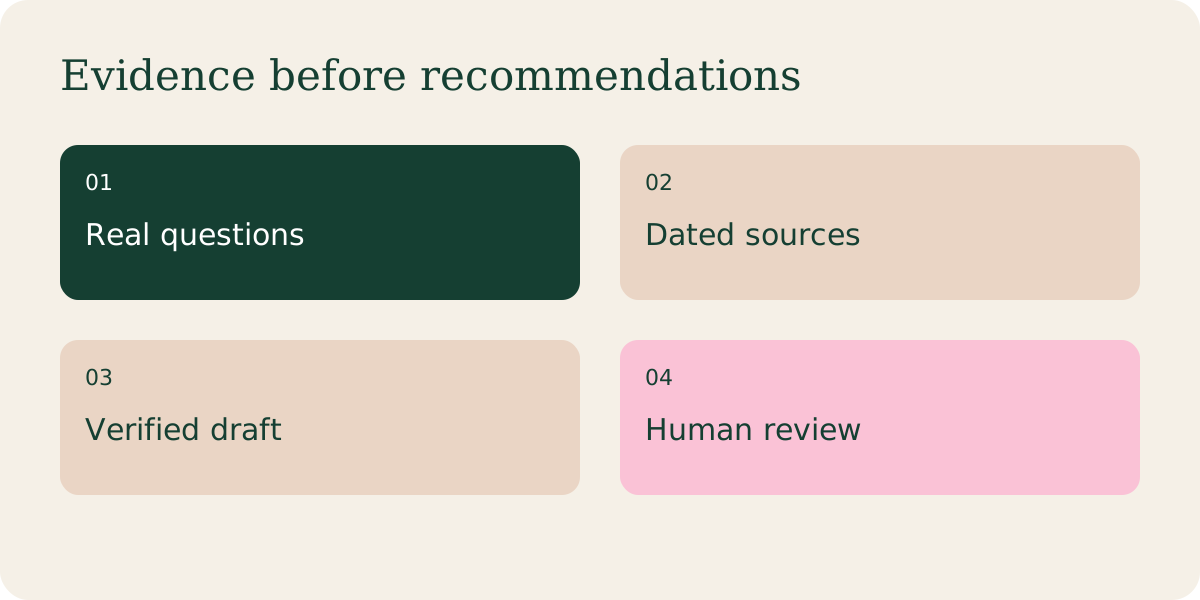
Step by step
Build an evidence pack: official specifications, your permitted photos or recordings, dated test notes, limitations and unanswered questions. Label products you have not personally tested.
Write a brief containing one audience question, scope, selection criteria and the next useful action. Ask AI for structure first, then a draft from the evidence.
Add the work AI cannot invent: your observations, original measurements, screenshots or a clear explanation of desk research. Include who should not buy and when an inexpensive alternative is enough.
Review every factual sentence against the source pack. Remove unsupported superlatives, invented testimonials and fabricated first-person experience. Check model-generated links yourself.
Place a clear commission disclosure beside the recommendation. Use program-approved links and required paid-link attributes. Recheck price and availability at publication or direct readers to current merchant information.
Try this prompt
Replace bracketed inputs with your real notes. Keep sensitive information out.
Draft a comparison for [reader question] using only [evidence]. Include selection criteria, a concise answer, trade-offs, who each option is unsuitable for and a non-purchase alternative. Mark every unsupported claim [VERIFY]. Do not imply hands-on testing unless my notes document it. Include a plain-language affiliate disclosure near the recommendation.
A worked example
Illustrative disclosure: “I may earn a commission if you buy through links in this guide.” A review based on specifications should say so; generated product scenes are illustrations, not proof of testing.