Your assignment
Create a small, affordable toolkit and a source folder for one affiliate campaign. Use your own project, or practice with the clearly illustrative compact-desk-lamp scenario.
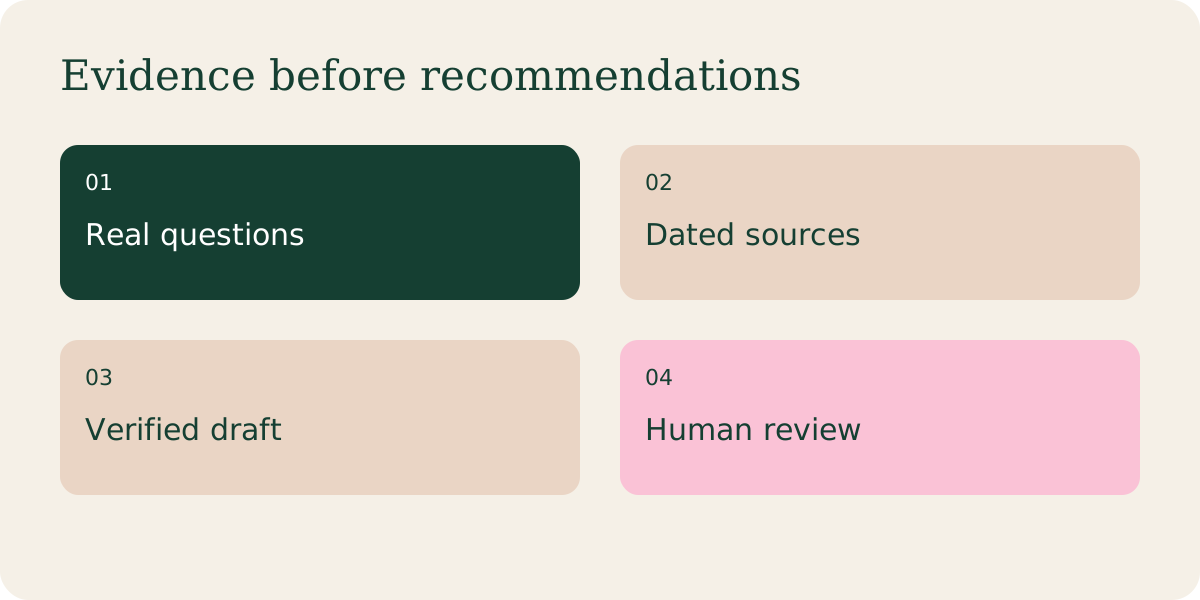
Step by step
Choose one audience, one offer to investigate, and one primary channel. Use the same project throughout this course. Plan for 20–40 minutes per lesson plus research and production time; these are estimates, not a speed promise.
Create folders named Evidence, Briefs, Drafts, Approved and Results. Save product sources with access dates. Separate your own test notes from merchant descriptions and unverified claims.
Use Claude or ChatGPT for planning, drafting and analysis. Use an agent only when a task needs several steps across files or apps. Model quality does not replace source verification.
Add Figma for layout and prototypes, or Higgsfield for a specific video need. Start with tools you already have. Check plan access, credits, commercial-use rights and export options before paying.
Ask for one draft deliverable and review it before expanding. Keep passwords, customer data and payment access out of starter exercises.
Try this prompt
Replace bracketed inputs with your real notes. Keep sensitive information out.
Act as my affiliate campaign editor. Audience: [audience]. Question: [question]. Available time: [hours]. Tools I already own: [tools]. Propose the smallest workflow that produces one evidence-backed guide and two social adaptations. List inputs, outputs, review points and costs I must verify. Do not assume paid features are available.
A worked example
Illustrative project: help apartment renters choose a compact desk lamp. The first deliverable is a comparison brief, not an entire automated store.