
A comparison helps someone choose a microphone. The recommended model is then unavailable, the merchant page shows another variant, or the price makes the original comparison misleading. The article earned a click but delivered a poor handoff.
A November 12, 2026 meta-analysis in the Journal of the Academy of Marketing Science combines 406 samples and 173,577 customers. It connects perceived authenticity with customer attitudes and intentions, but does not establish that an affiliate-page change causes sales. Its practical prompt is useful: make your recommendation verifiable against reality.
The microphone comparison below is a fictional teaching example. It contains no live affiliate offer or promised earnings.
1. State the job and the evidence
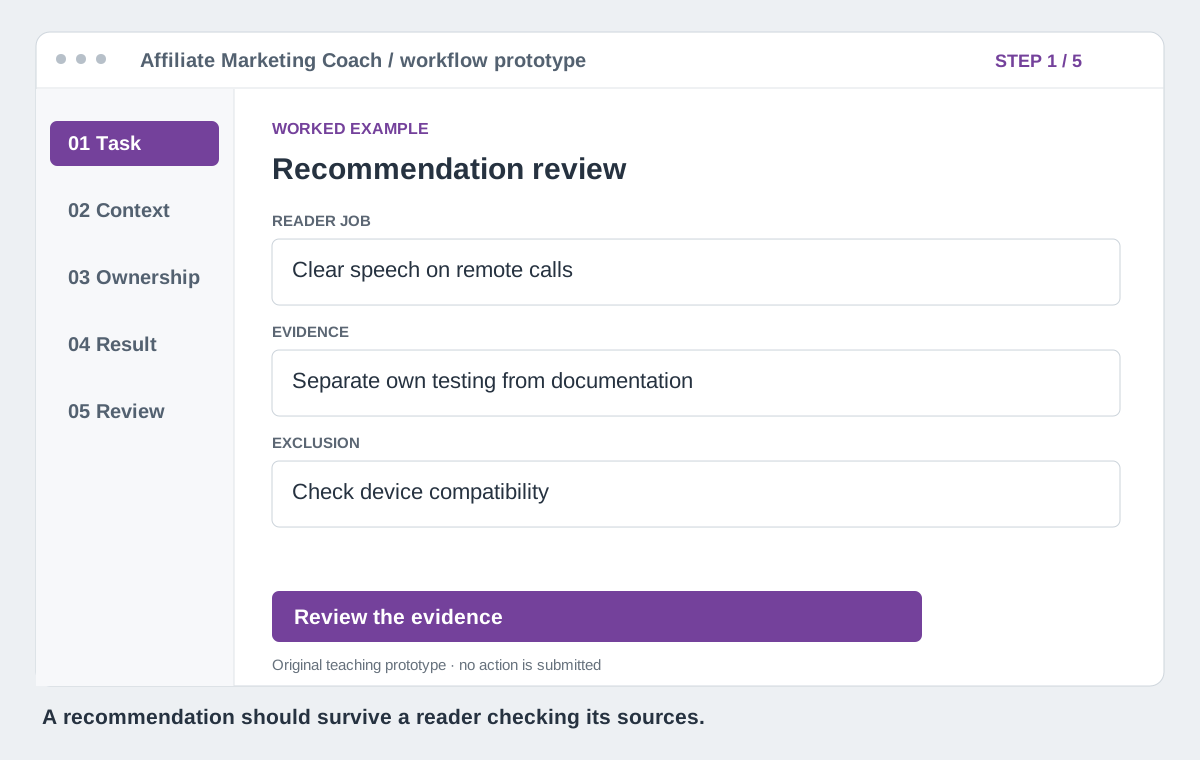
Choose one reader need: clear speech for remote calls from a noisy desk. Explain the criteria that matter, what you personally tested and what comes from manufacturer documentation. Never imply hands-on experience you do not have.
Include who should not buy the recommended product. A reader with an incompatible computer or a different recording environment needs that information before the merchant click. Keep commercial disclosures close to recommendations and links so the relationship is understandable.
2. Inspect the exact merchant destination
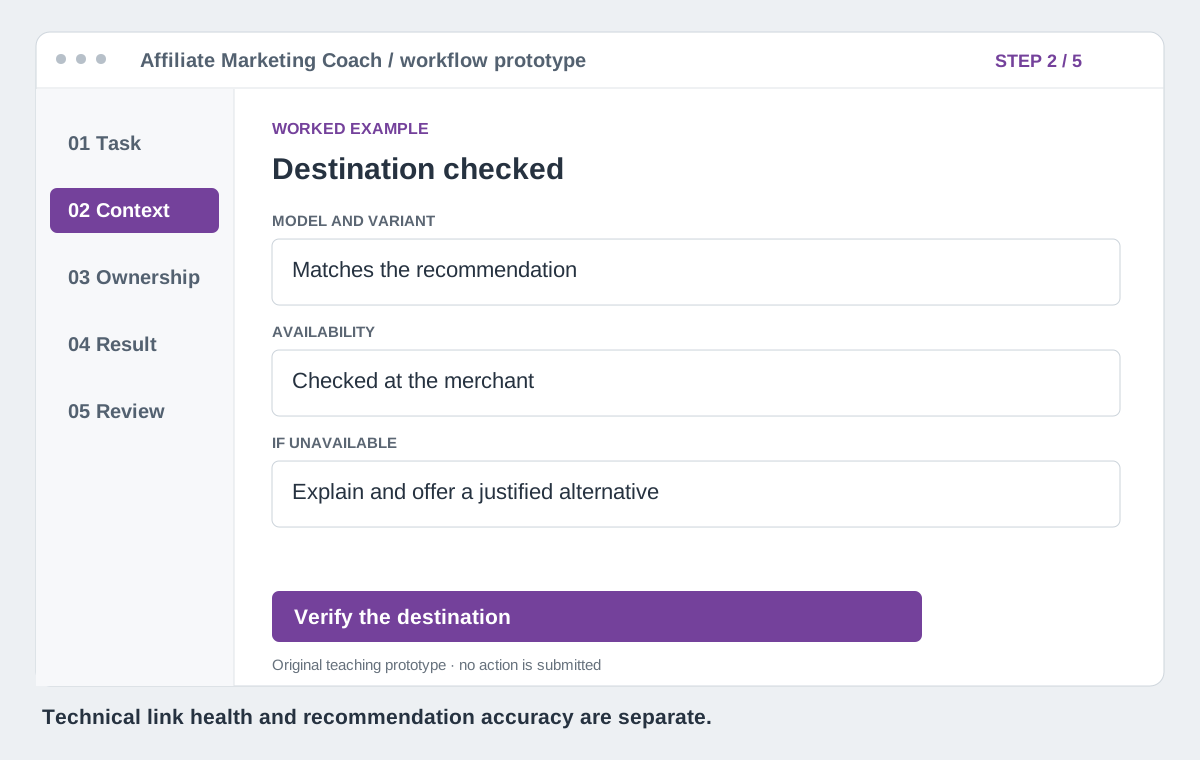
Open the approved link and check the model, variant, seller, availability, price context and shipping region. A link that loads successfully can still send the reader to the wrong choice. Record when you checked volatile facts and set a sensible review cadence.
If the recommended option disappears, explain that on the page. Offer a justified alternative rather than silently redirecting people to a more profitable product. Follow each program’s rules for links, prices, images and permitted placements.
3. Prepare a decision receipt for the reader
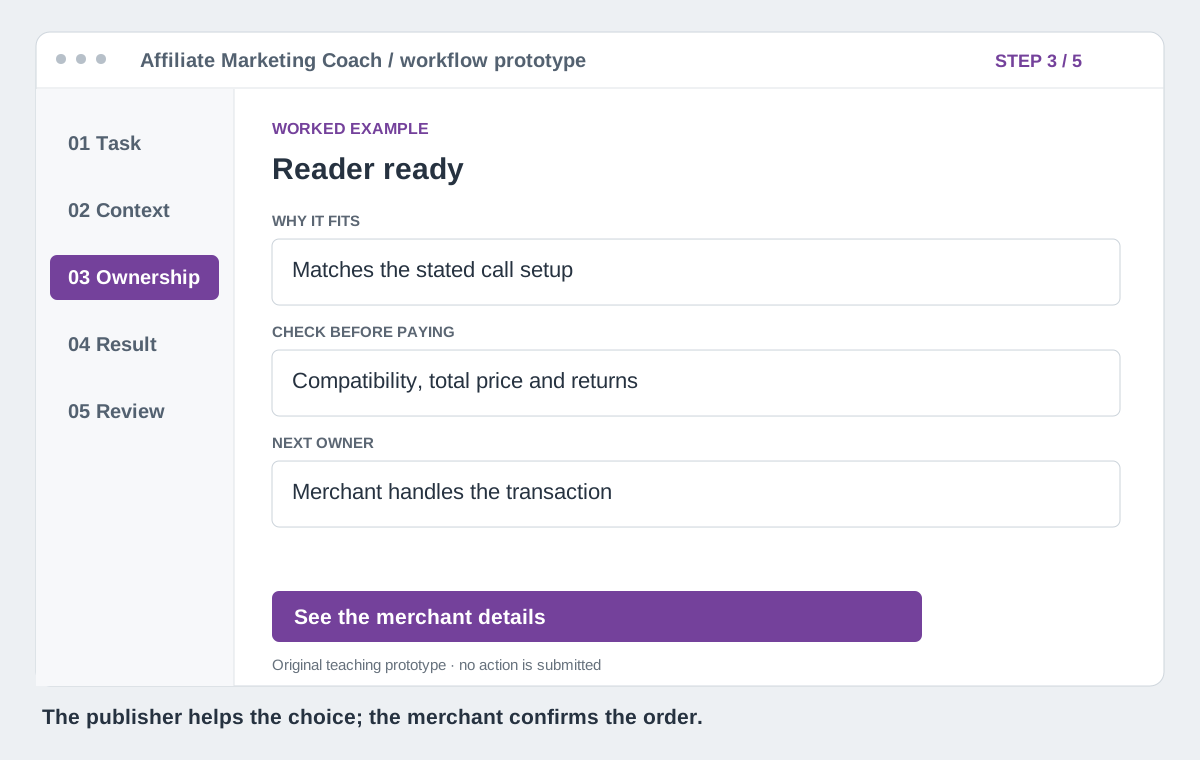
Before the click, summarize why the option fits, the remaining checks and what happens at the merchant. A small buying checklist can preserve useful context when an AI assistant summarizes your page or the reader returns later.
Use stable headings and clear product identifiers alongside readable prose. Keep your original tests and their limitations easy to find. These are useful editorial practices, not a guarantee of AI citation, ranking or commission attribution.
4. Keep attribution separate from influence
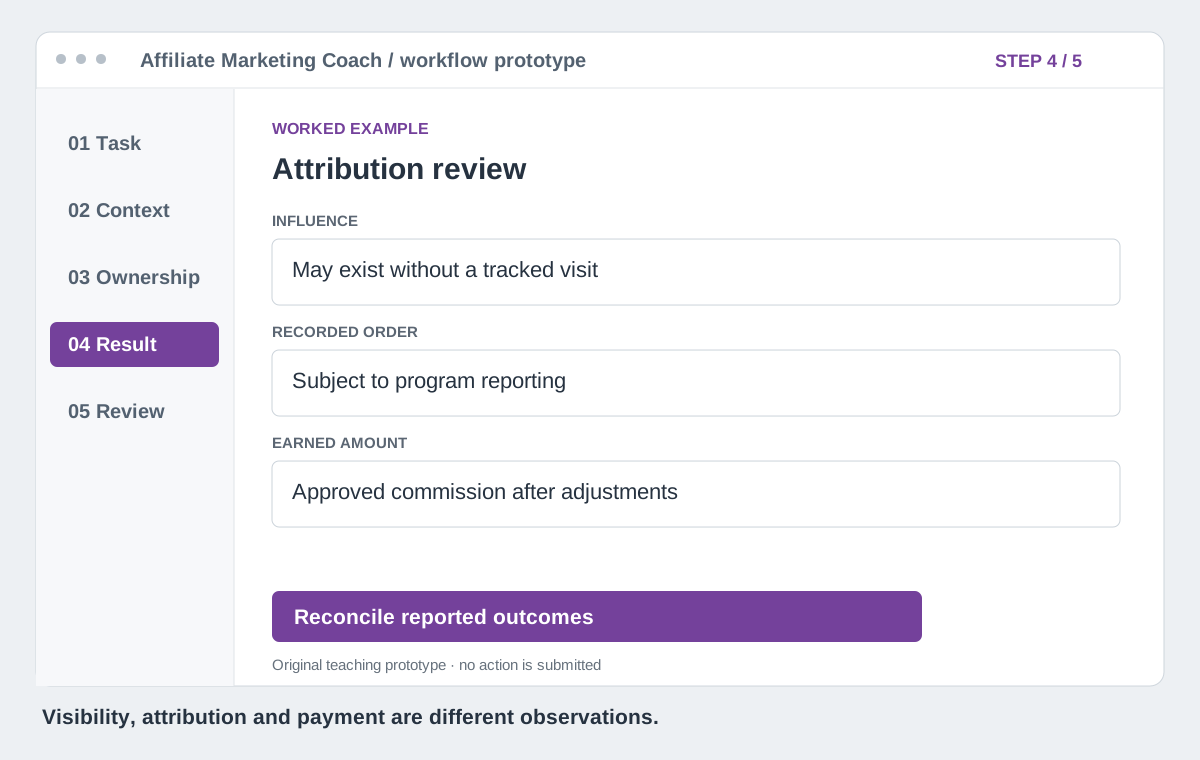
An assistant might use your evidence without sending an eligible tracked referral. Treat that as a possible attribution gap, not proof of lost commission. Measure the stages you can observe: qualified page visits, approved outbound links, program-reported orders, approved commission and payment.
Use only identifiers and reporting methods supported by your program. Do not add hidden redirects or invent a universal tracking method for agent journeys. Reconcile pending orders after the program’s approval and return windows; a reported sale can later be reversed.
5. Test the handoff against a buyer outcome
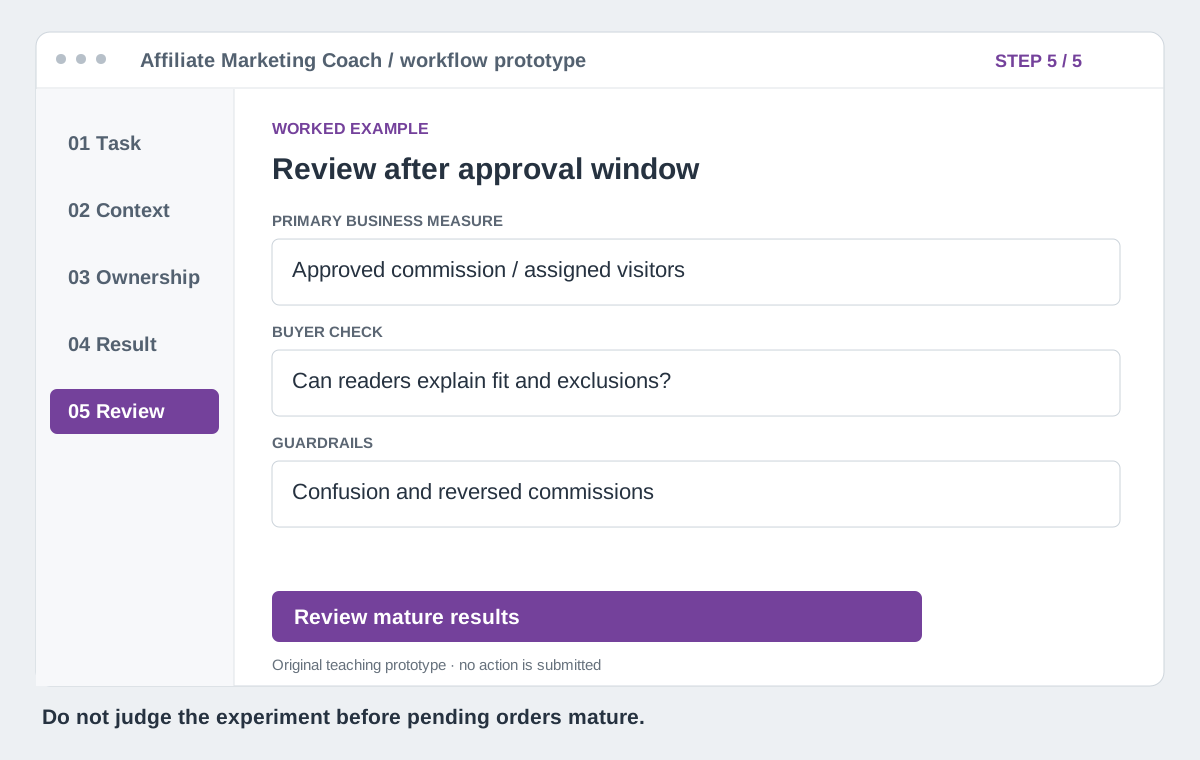
Try one change: a concise compatibility-and-fit checklist beside the merchant link. Where traffic and reporting permit, randomly assign page visitors and compare approved commission per assigned visitor after the approval window. Watch complaints, unsuitable purchases where known and reversed commissions.
If order-level outcomes are unavailable, report the limit. A change in outbound click rate alone cannot establish better purchases or higher earnings. For a small audience, ask a few readers to use the comparison and explain their choice, then repair the misunderstandings you observe.
What changes when agents browse for buyers?
Our working hypothesis is that clear evidence and reliable product facts become more useful as recommendations are summarized. Attribution may become less visible. Neither change means the web stops mattering: original testing, detailed comparisons, merchant policies and transaction records still need authoritative homes.
Use the AI-agent attribution playbook for a program-by-program audit, and the Handoff Scorecard for the broader customer experience. Improve the decision you help a reader make, then measure the commercial result you can actually verify.